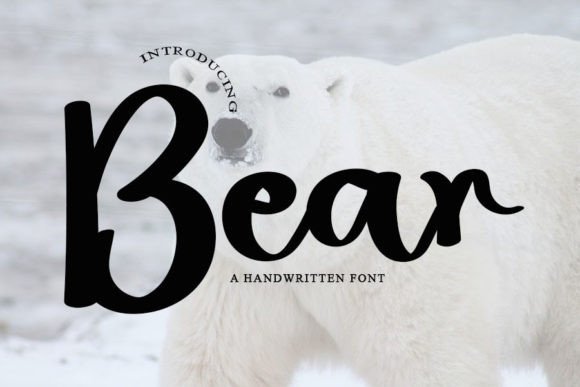
Bear Handwritten Font for Crafters & Small Business Owners
As someone who hand-labels soy candles, designs wedding invites in Canva, cuts vinyl stickers on my Cricut, and sells printable planners on Etsy—I know how much a single font can shape how customers see my brand. That’s why Bear landed in my cart and hasn’t left my design toolkit since. It’s not just another script font—it’s a handwritten typeface with quiet confidence: clean enough to read at 12pt on a tea towel tag, elegant enough to anchor a luxury wedding suite, and just quirky enough to feel human, not AI-generated.
Bear lives in that sweet spot between polished and personable. Its letterforms flow with natural rhythm—no stiff loops or overdone flourishes—but there’s still warmth in every curve. The lowercase a has a gentle tilt, the g curls with soft intention, and the capitals carry presence without shouting. It’s a script font built for real-world making—not just mood boards. Whether you’re laser-cutting wooden gift tags or printing kraft paper labels for small-batch bath salts, Bear delivers clarity and charm in equal measure.
Where Bear Works Best in Physical & Digital Products
I use Bear most often where first impressions matter—and readability can’t be sacrificed for prettiness:
- Candle & product labels: Paired with a crisp sans serif (like Montserrat or Inter), Bear shines as the brand name or scent title—legible even at 8mm height on a 2oz jar label.
- Stickers & vinyl decals: Its smooth, open counters cut cleanly on Cricut Explore and Silhouette Cameo machines. No fragile serifs to snap during weeding.
- Wedding stationery: “Mr. & Mrs.” on a welcome sign, names on place cards, or “Love Story” on a framed print—all feel intentional, not generic.
- Digital printables: Planner headers, habit trackers, and quote pages gain personality without overwhelming layout. I’ve used it at 14pt on A5 PDFs with zero complaints about legibility.
- Seasonal packaging: Think “Hand-Poured • Autumn Spice” on linen gift bags or “Made With Love • Holiday 2024” stamped on kraft boxes—Bear adds handmade sincerity without looking dated.
- Mugs, totes & apparel: At medium sizes (24–36pt), Bear holds up beautifully in screen-printed and DTG mockups. Its balanced weight prevents ink bleed on textured fabrics.
Readability Tips You’ll Actually Use
Here’s what I’ve learned after testing Bear across ten+ physical products:
- For cutting machines: Stick to the standard character set—avoid swashes on small stickers (under 1.5”). They’re gorgeous at larger sizes, but delicate on ¾” die-cuts.
- For printed cards & invites: Use Bear for headlines and names only. Keep body text in a highly legible sans serif or soft serif. This isn’t a paragraph font—and it shouldn’t be.
- For mockup previews: Export PNGs at 300dpi and zoom to 100% before finalizing. Bear’s elegance reads best when spacing is generous—tight kerning can blur its charm.
- For multilingual projects: Bear includes extended Latin support (accents for French, Spanish, German), so “Bonne Année” or “Gracias” stays true to its voice.
Smart Pairings That Elevate Your Brand
Bear thrives in contrast. As a display font, it needs grounding—and pairing is where your brand voice gets sharper. My go-to combos:
- Bear + Lato or Poppins: Clean, neutral sans serifs let Bear’s personality lead while keeping pricing, ingredients, or event details ultra-clear.
- Bear + Playfair Display or Cormorant Garamond: For high-end stationery or boutique packaging, this serif + script pairing feels timeless—not trendy.
- Bear + a monoline sans (like Manrope or Karla): Perfect for minimalist sticker sheets or digital templates where modern simplicity meets handwritten warmth.
No need to overthink it: if your product feels warm, thoughtful, or intentionally small-batch, Bear belongs in your Script Amp collection alongside fonts that serve both heart and hustle.
Licensing That Supports Your Business—Not Limits It
This matters: Bear is a commercial font. That means you can use it to design physical products you sell (candles, prints, apparel), digital downloads (planner bundles, SVG files, Canva templates), client work (logo design, social media kits), and even merchandise (mugs, tote bags, enamel pins). No hidden restrictions—just clear, ethical licensing aligned with how makers actually work. Just keep your license active if you’re using it across multiple devices or team members.
What sets Bear apart isn’t just how it looks—it’s how it performs. It doesn’t ask you to compromise between beauty and function. It doesn’t force you into rigid design rules. And it doesn’t pretend to be something it’s not: a genuine, hand-drawn handwritten font made for people who make things by hand.
Whether you’re sketching ideas in a notebook or prepping a batch of 500 holiday labels, Bear shows up ready—not as decoration, but as part of your craft.